Today we celebrate Palm Sunday, Jesus’ Triumphal Entry into the city of Jerusalem. It was Passover then, and it led to the end of what we call “Holy Week”, which culminated in the crucifixion, burial and resurrection of Jesus.
And I can’t get the image out of my head. I’m not talking about the palm branches, or the donkey, or the cries of “Hosanna”. Although that was all a part of the scene. But it’s recorded in Matthew 21:12-16; Mark 11: 15-17, and Luke 19:45 & 46. Jesus did some “cleansing”.
“And Jesus entered the temple and drove out all who sold and bought in the temple, and he overturned the tables of the money-changers and the seats of those who sold pigeons. He said to them, “It is written, ‘My house shall be called a house of prayer,’ but you make it a den of robbers.” And the blind and the lame came to him in the temple, and he healed them. But when the chief priests and the scribes saw the wonderful things that he did, and the children crying out in the temple, “Hosanna to the Son of David!” they were indignant, and they said to him, “Do you hear what these are saying?” And Jesus said to them, “Yes; have you never read, “‘Out of the mouth of infants and nursing babies you have prepared praise’?” And leaving them, he went out of the city to Bethany and lodged there.” (Matthew 21:12-17 ESV - emphasis mine)
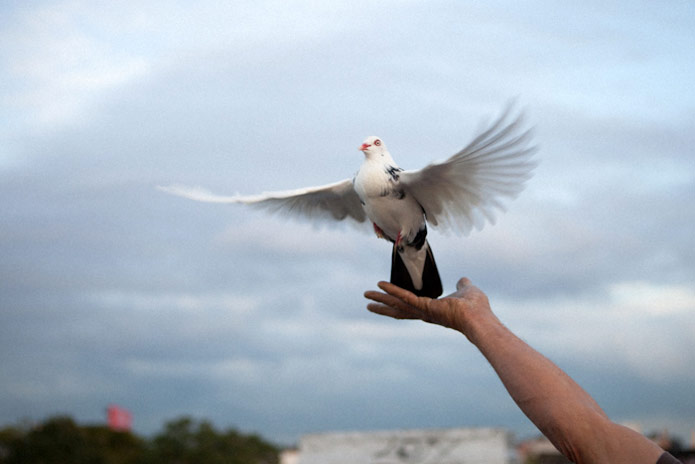
I’ve read this before. Several times. I’ve heard sermons taught about it. Most teaching I heard as I grew up referenced this passage as the basis for the teaching against churches “making money” …”no buying/ selling in the church building”. There’s something much deeper going on here. And it ties into the words Jesus references from the Old Testament Scripture in Isaiah 56 (along with Jeremiah 7:11). The clue that jumped out at me is “pigeons” (or “doves” in some translations). What’s the big deal with pigeons? In the Mark narrative, it mentions pigeons, in the Luke narrative, it does not. Here’s a clue: in the law of the Jews, the doves were the provision for the poor to present for their sacrifices. I’m not going to list a complete teaching from Old Testament here on the details God gave for presenting offerings and sacrifices, but many times, the pigeons / doves were the poor person’s option for presenting if they could not afford a lamb, etc. You can go back and check it out. It’s informative. (Ex: Leviticus 5:7&8, and Leviticus 12:5-8).
And I can’t get the image out of my head. I’m not talking about the palm branches, or the donkey, or the cries of “Hosanna”. Although that was all a part of the scene. But it’s recorded in Matthew 21:12-16; Mark 11: 15-17, and Luke 19:45 & 46. Jesus did some “cleansing”.
“And Jesus entered the temple and drove out all who sold and bought in the temple, and he overturned the tables of the money-changers and the seats of those who sold pigeons. He said to them, “It is written, ‘My house shall be called a house of prayer,’ but you make it a den of robbers.” And the blind and the lame came to him in the temple, and he healed them. But when the chief priests and the scribes saw the wonderful things that he did, and the children crying out in the temple, “Hosanna to the Son of David!” they were indignant, and they said to him, “Do you hear what these are saying?” And Jesus said to them, “Yes; have you never read, “‘Out of the mouth of infants and nursing babies you have prepared praise’?” And leaving them, he went out of the city to Bethany and lodged there.” (Matthew 21:12-17 ESV - emphasis mine)
I’ve read this before. Several times. I’ve heard sermons taught about it. Most teaching I heard as I grew up referenced this passage as the basis for the teaching against churches “making money” …”no buying/ selling in the church building”. There’s something much deeper going on here. And it ties into the words Jesus references from the Old Testament Scripture in Isaiah 56 (along with Jeremiah 7:11). The clue that jumped out at me is “pigeons” (or “doves” in some translations). What’s the big deal with pigeons? In the Mark narrative, it mentions pigeons, in the Luke narrative, it does not. Here’s a clue: in the law of the Jews, the doves were the provision for the poor to present for their sacrifices. I’m not going to list a complete teaching from Old Testament here on the details God gave for presenting offerings and sacrifices, but many times, the pigeons / doves were the poor person’s option for presenting if they could not afford a lamb, etc. You can go back and check it out. It’s informative. (Ex: Leviticus 5:7&8, and Leviticus 12:5-8).
But now read those words from Matthew above again, and you see that the pigeons were being sold, no doubt a provision for the sacrifice. And Jesus goes into the temple, overturns the tables of the money changers, and the seats of those who sold doves. That’s statement enough. But then, he quotes from the Old Testament, “my house is to be a house of prayer, but you have made it a den of thieves”. This is actually a blending, if you will, of Isaiah 56 and Jeremiah 7. To me, when I see Jesus directly quote an Old Testament verse, I feel it’s important to see the whole context in order to gain the deeper meaning Christ was getting at.
Isaiah 56: 1-17 – “Thus says the Lord: “Keep justice, and do righteousness, for soon my salvation will come, and my righteousness be revealed. Blessed is the man who does this, and the son of man who holds it fast, who keeps the Sabbath, not profaning it, and keeps his hand from doing any evil.”
Let not the foreigner who has joined himself to the Lord say, “The Lord will surely separate me from his people”; and let not the eunuch say, “Behold, I am a dry tree.” For thus says the Lord: “To the eunuchs who keep my Sabbaths, who choose the things that please me and hold fast my covenant,I will give in my house and within my walls a monument and a name better than sons and daughters; I will give them an everlasting name that shall not be cut off. “And the foreigners who join themselves to the Lord, to minister to him, to love the name of the Lord, and to be his servants, everyone who keeps the Sabbath and does not profane it, and holds fast my covenant—these I will bring to my holy mountain, and make them joyful in my house of prayer; their burnt offerings and their sacrifices will be accepted on my altar; for my house shall be called a house of prayer for all peoples.” The Lord God, who gathers the outcasts of Israel, declares, “I will gather yet others to him besides those already gathered.” (ESV – emphasis mine).
This passage is one of inclusion, one where God is stating that the foreigner, the outcast, is not to be excluded from his presence, from his family. He will gather “others besides those already gathered”. And here Jesus sees in the temple that there are obstacles being put in the way of coming to him for forgiveness. Need a sacrifice? Have I got a deal for you! Can’t afford a lamb? Well, here’s one of our handy-dandy pigeons at a special price… (some say the money changers were converting currency into temple currency, thereby making a handy profit off the exchange). And Jesus comes in and demands that “my house shall be called a house of prayer”…but the Isaiah quote in its completion is “for all nations”. God’s people were never to be focused on keeping people OUT of God’s kingdom. They were to make the temple a place of worship for ALL to come to Jesus.
And then the Matthew narrative states that after Jesus cleanses the temple, “the blind and the lame came to him and he healed them”. The outcasts: those who were not whole…those who were marginalized and left for themselves. Jesus brings them to himself to heal. Not to put obstacles in their path to the Kingdom, but to provide a way for them to be healed. As only he can. The blending of the Isaiah passage with this passage in Jeremiah 7:1-11 is doubly poignant:
“The word that came to Jeremiah from the Lord: “Stand in the gate of the Lord‘s house, and proclaim there this word, and say, Hear the word of the Lord, all you men of Judah who enter these gates to worship the Lord. Thus says the Lord of hosts, the God of Israel: Amend your ways and your deeds, and I will let you dwell in this place. Do not trust in these deceptive words: ‘This is the temple of the Lord, the temple of the Lord, the temple of the Lord.’ “For if you truly amend your ways and your deeds, if you truly execute justice one with another, if you do not oppress the sojourner, the fatherless, or the widow, or shed innocent blood in this place, and if you do not go after other gods to your own harm, then I will let you dwell in this place, in the land that I gave of old to your fathers forever. “Behold, you trust in deceptive words to no avail. Will you steal, murder, commit adultery, swear falsely, make offerings to Baal, and go after other gods that you have not known, and then come and stand before me in this house, which is called by my name, and say, ‘We are delivered!’—only to go on doing all these abominations? Has this house, which is called by my name, become a den of robbers in your eyes? Behold, I myself have seen it, declares the Lord.” (ESV – emphasis mine).
So, taking this all together, Jesus is doing much more than simply stating a policy on church commerce. He was speaking the very words that he (the Word) spoke through Isaiah to God’s people that revealed his heart for all the nations to come to worship. That those who are outcasts, or unclean, or those not whole, now have a way to be part of the Kingdom. And by repeating his warning spoken previously by the prophet Jeremiah, Jesus is emphasizing the imperative to that his Kingdom is a welcome place for those who are oppressed, and poor; the widow, the fatherless, the innocent.
My heart aches and I find myself weeping to think of the times I’ve put obstacles before people who Christ longs to bring into his Kingdom through the forgiveness and healing that only he can give through the blood of his perfect sacrifice of himself on the cross.
So I prompt you to ask yourself as I have, how much do you charge for forgiveness?
-Lori

